
Recent Posts
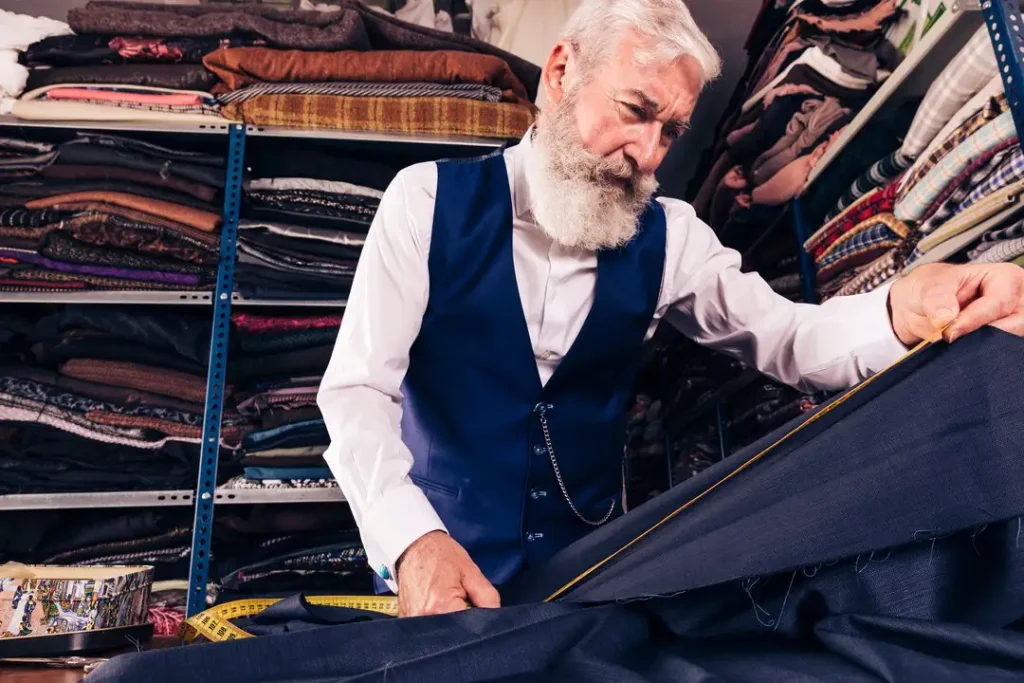
A good tailor for suit work in Dubai or the wider GCC should take measurements in person (not just over a form), work with named fabric mills rather than vague "premium" claims, offer at least one fitting before final delivery, and be upfront about turnaround time, which typically runs two to four weeks for a fully bespoke piece. If a tailor cannot answer those four points clearly, that is the warning sign, not the suit itself.
There are a lot of tailors in this region claiming to be the best, and most of them are decent at hemming trousers. Fewer of them can actually build a jacket from a paper pattern that fits your shoulders the way they sit, not the way a size chart assumes they sit. Picking the right one matters more in the Gulf than almost anywhere else, partly because the climate punishes bad fabric choices and partly because business and wedding wardrobes here genuinely get worn hard. The Travelling Tailor operates in this space as a home-fitting bespoke service across the UAE, and the questions below are roughly the ones worth asking before booking anyone, this brand included.
What Does a Tailor for Suit Work Actually Do Differently From a Shop
A retail suit starts from a standard block size and gets nipped in at the waist or shortened at the cuff. A proper suit tailor starts from your body. The cutting happens around your shoulder slope, your posture, even how square or rounded your back is, none of which a size 40R accounts for. Custom tailoring encompasses made-to-measure and fully bespoke garment creation, where individual client measurements, fabric selections, and stylistic preferences are incorporated into garments crafted entirely around the wearer rather than adjusted after the fact. That distinction sounds academic until you have stood in a jacket that was built for your shoulders and felt how differently it sits compared to one that was merely altered to fit them.
Why Fabric Sourcing Matters More in Dubai Than People Realize
Dubai's climate is unforgiving on the wrong wool. A heavy English flannel that performs beautifully in London will have you sweating through a boardroom meeting by 11am here. Tailors that source from established mills, Italian or British, tend to carry lighter-weight wools, tropical blends, and linens specifically because the regional clientele needs them. It is one reason fabric origin is worth asking about directly rather than accepting "premium fabric" as an answer, since that phrase means nothing on its own.
How Many Fittings Should a Suit for Dubai or the GCC Require
A genuinely bespoke suit needs at least two fittings to get the structure and drape right, sometimes three if the design has technical elements like a structured shoulder or a fitted waistcoat. Anything offered as bespoke with zero fitting before delivery is, functionally, made-to-measure wearing a different label. That is not necessarily a bad product, but it is a different product, and the price should reflect which one you are actually buying.
- Single fitting: acceptable for simpler made-to-measure pieces, shirts, or repeat orders from an established pattern
- Two fittings: the minimum for a first bespoke suit, covering shoulder, chest, and trouser break
- Three or more fittings: typical for three-piece suits, sherwanis, or anything with heavy structural tailoring
A tailor who skips straight to delivery on a first order is cutting corners somewhere, and it usually shows up in the shoulder line first.
Is bespoke tailoring worth it for someone who only wears a suit occasionally
If suits are worn a handful of times a year, for weddings or the odd formal event, the math shifts. A well-built bespoke suit will outlast three or four off-the-rack purchases and won't need re-altering every time body shape changes slightly, but the upfront cost is harder to justify against infrequent use. This is one of the genuine trade-offs worth being honest about: bespoke rewards frequency of wear. Someone in this position might be better served by a single high-quality made-to-measure piece rather than a fully bespoke wardrobe.
What Should the Tailoring Process Look Like From Booking to Delivery
The sequence is fairly standard across reputable operators: consultation, measurement, fabric selection, fitting, then final delivery. What varies is where the convenience factor sits. Home-visit services like The Travelling Tailor remove the showroom step entirely, bringing fabric swatches and measuring directly to a home, office, or hotel room across the UAE. That convenience does not replace the fitting stage though, and it shouldn't. Anyone promising a finished bespoke suit with zero in-person fitting is asking for trust that the fabric and pattern alone usually cannot earn.
How to Spot a Tailor That Is Cutting Corners on a GCC Suit Order
A few patterns tend to repeat among lower-quality operators in this market. Vague answers about fabric origin when asked directly is one. Refusal to schedule even a single fitting is another, often dressed up as "we already have your measurements." Unrealistic turnaround promises, same-week delivery for a fully bespoke three-piece, also deserve scrutiny, since genuine bespoke construction simply takes longer than that. None of these are dealbreakers in isolation, but two or more together is worth pausing over.
How long does it actually take to get a tailored suit in the GCC
Two to four weeks is the realistic range for a bespoke order, depending on design complexity and how many fittings are required. Rush orders exist, but they generally trade away one of the fitting stages, which is a trade worth understanding rather than discovering after the fact.
Does a home-visit tailor compromise on quality compared to a showroom
Not inherently. The fitting still happens, the fabric range can still be extensive, and the measurement process is no less rigorous simply because it occurs in a living room instead of a shop floor. What it does require is that the tailor bring genuine fabric swatches and proper measuring tools, not a tape measure and a phone screen of options.
References
- Ellen MacArthur Foundation findings on garment longevity, cited via Precision Business Insights, Tailoring and Alteration Services Market Report
- Global Tailoring Services Market Research Report — Dataintelo, custom tailoring segment analysis