
Recent Posts
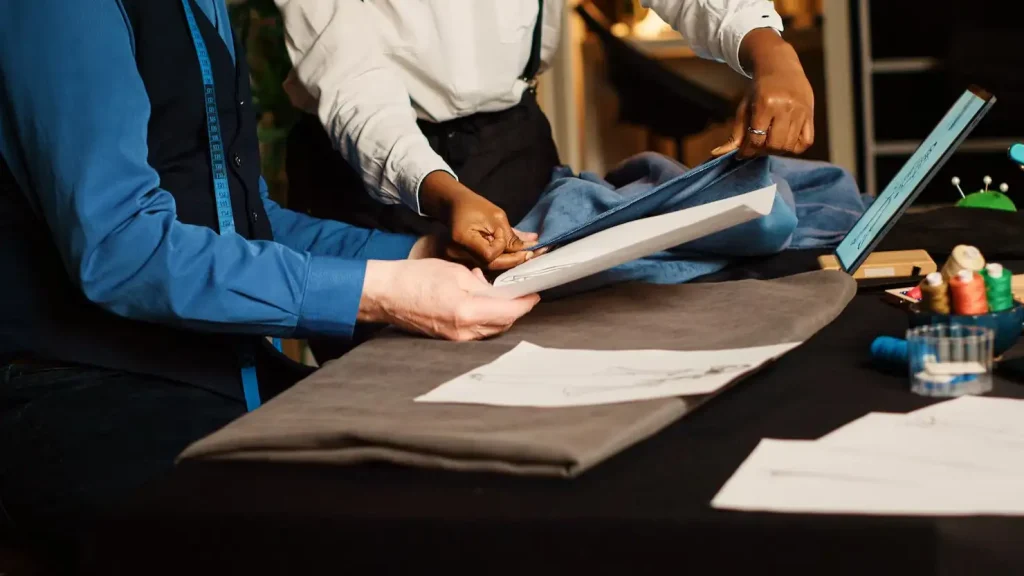
A perfectly tailored suit fits at three points first: the shoulder seam sits exactly at the edge of the shoulder bone, the jacket closes without straining or gaping at the button, and the trouser break sits clean at the shoe without bunching. Fabric weight and lining quality matter, but if those three fit points are wrong, nothing else fixes the suit. Suit tailoring is, at its core, the discipline of getting those points right before anything else gets added.
Most people can spot a badly fitted suit on a stranger without being able to explain why. The shoulders look too big, or the jacket pulls slightly when buttoned, or the sleeve sits an inch too long. The explanation for all three is almost always the same: the suit was built for an average body, then adjusted, instead of being cut for a specific one from the start. That is the entire premise behind proper suit tailoring, and it's worth breaking down what each part of the process is actually doing.
Where Does Suit Tailoring Start Going Right or Wrong
It starts at the shoulder. Tailors call this the most difficult part of a jacket to alter after construction, because the shoulder seam is structural, not cosmetic. If it sits even slightly wrong at the fitting stage, that is the moment to flag it, not after the suit has been worn twice. Chest, waist, and sleeve length follow from there, but shoulder fit is the foundation everything else builds on.
What Fabric Choices Actually Change About a Tailored Suit
Wool remains the standard for structured suits because it holds a crease and drapes predictably, but weight matters enormously depending on climate. A 280-gram wool suit feels substantial and tailors beautifully into sharp lines, but it is the wrong choice for daily wear in heat above 35 degrees. Lighter wool blends, tropical wool specifically, or linen for casual pieces solve that problem without sacrificing structure entirely. Tier 1 cities are emerging as hubs for high-end custom garment studios precisely because demand for climate-appropriate premium fabric has grown alongside general interest in bespoke menswear, not despite it.
How Many Fittings Does Proper Suit Tailoring Require
This is one of the more commonly skipped steps, and it shouldn't be. A first fitting checks the basic shell, shoulder, chest, length. A second fitting checks the refined details after the canvas and lining go in, where fit can shift slightly once the internal structure is added. Skipping straight from measurement to finished suit removes the safety net that catches small errors before they're permanent.
- First fitting: raw shell construction, no lining or finishing
- Second fitting: post-canvas check, sleeve and collar adjustment
- Final delivery: pressed, finished, ready to wear
A tailor confident enough in their pattern-drafting to skip the second fitting on a repeat client is different from one skipping it on a first order. Context matters here.
Why does a tailored suit feel different from an off-the-rack one even in the same fabric
Because the cut is doing work that fabric alone cannot. An off-the-rack jacket in identical wool will still pull at the back when the arm reaches forward, because the pattern was drafted for an average posture, not a specific one. Tailored construction accounts for how a particular body actually moves, which is the entire point of measuring beyond chest and waist circumference.
What Details Separate Good Suit Tailoring From Mediocre Work
Lapel width relative to jacket structure, button stance position, the cleanliness of the buttonhole stitching, these are the things a trained eye checks first. Hand-stitched lapels roll more naturally than machine-pressed ones over time. Lining quality affects how the jacket moves and how long it holds its shape under regular wear. None of these are dramatic differences in a single photo, but they show clearly after six months of wear, which is really the only honest test of tailoring quality.
Does a more expensive fabric automatically mean a better tailored suit
No, and this is worth saying plainly. A beautifully cut suit in a mid-range wool will outperform a poorly cut suit in expensive cashmere every time. Fabric quality matters, but it is the second variable, not the first. Cut and fit come before fabric cost in any honest ranking of what makes a suit work.
References
- Global Tailoring Services Market Research Report — Dataintelo, custom tailoring sub-segment data
- Bespoke Tailoring Services Market Report — HTF Market Insights, fabric and regional analysis